

Thinking about retiring to France from the US?
You’re not alone. It’s possible for Americans to retire to France, but the process is more structured than many expect.
This guide explains exactly how US citizens retire in France, including the visa you’ll need, income requirements, healthcare access, taxes, and realistic monthly budgets. It’s written specifically for Americans planning retirement, but other than the taxes, it applies to any non-EU citizen.
If you’re trying to decide whether France is a practical retirement option or want a clear, step-by-step plan, this article covers what actually matters, based on real experience and current French rules.
Updated for 2026
Table of Contents
- Why Retire in France?
- Can Americans Retire in France?
- Visa Options for Retiring to France from the US
- How Much Does It Cost to Retire in France?
- Healthcare in France for US Retirees
- Taxes for US Retirees Living in France
- Best Places for Americans to Retire in France
- Pros and Cons of Retiring to France from the US
- Common Mistakes Americans Make When Retiring to France
- Frequently Asked Questions About Retiring to France
- Is Retiring to France from the US Worth It?
Disclosure: Some links in this article may be affiliate links. If you choose to use them, we may earn a commission at no additional cost to you. We only recommend services we believe are genuinely useful.

Why Retire in France?
For many Americans, France offers a rare combination: a high quality of life, accessible healthcare, and a legal path to long-term residency that does not require employment or investment.
While France is often overshadowed by Spain and Portugal as a European retirement destination, it has both an easy-to-obtain visa for retirees and can be a surprisingly low-tax destination for Americans thanks to the US-France tax treaty.
Can Americans Retire in France?
The short answer: yes. France generally allows American retirees to settle in France permanently. There’s no requirement to invest in the country or purchase property, although many retirees choose to do so.
Is there a retirement visa for France?
Yes, but it’s not referred to as a retirement visa, rather a “Visitor” visa. It’s valid for 1 year and can be renewed multiple times from within France. It doesn’t grant the right to work in France, and is only for those who can financially support themselves. There’s no age requirement, so it works for both early and traditional retirees.
Do US citizens need a visa to retire in France?
Yes. While US citizens don’t need a visa to stay in France for up to 90 days as tourists, they do need a visa for longer stays.
If you plan to only visit for less than 90 days at a time, living most of the year somewhere else, then there’s no need for a visa.
Can you live in France full-time as a retiree?
If you’re planning on settling in France on a full-time basis, then you will require a visa. Visas are generally issued for 1 year at a time and are renewable without leaving France. You must apply initially from your home country.
After renewing the visa for 5 years, you qualify for permanent residency. The permanent residency card is valid for 10 years and is indefinitely renewable. This should be the goal of anyone looking to settle in France long-term.
Can retirees gain French citizenship?
Sadly, no. At least not easily. As of 2025, new guidance by the French government requires stricter economic integration into French society to qualify for naturalization and citizenship. That includes working for several years in France, which the Visitor visa does not allow.

Visa Options for Retiring to France from the US
EU citizens and their spouses can retire to France without any visas or hurdles to jump through. If you’re lucky enough to have a way to obtain EU citizenship by descent or birthright, that will likely be the best path to pursue.
For everyone else with no documented European heritage, like us, there’s still a straightforward way to obtain a visa and retire to France.
Visa disclaimer: Visa rules, documentation requirements, and approval outcomes can change and vary by consulate and individual circumstances. This information reflects commonly used pathways for US retirees and is provided for general educational purposes only. It is not legal or immigration advice.
The long-stay Visitor visa (VLS-TS)
The Visitor visa, the VLS-TS Visiteur, is the primary retirement visa. There’s no age limit, so it’s open to early retirees.
Visiteur is one of many categories of VLS-TS visas. VLS-TS visas are for stays over 1 year and are equivalent to a residency permit, meaning they can be renewed in France without having to leave the country.
What separates the Visitor visa from the others is the lack of the right to work in France. To qualify, applicants must prove adequate funds or reoccurring income to support themselves in France. This can include Social Security income, pensions, 401k’s, or other savings and investments.
Financial requirements for US retirees

To qualify for the Visitor visa, an applicant must provide recent statements showing stable, recurring income that is considered sufficient for living in France. In practice, consulates typically use France’s minimum wage (SMIC) as a reference point when evaluating financial resources.
For 2026, the SMIC is approximately €22,000 gross per year per person (roughly €17,300 net for context). Visa decisions are made at the discretion of the consulate processing the application, so it is generally advisable to demonstrate income comfortably above the minimum when possible. (€1 = $1.15, early 2026)
Savings and investments can be used in place of recurring income. There is no published guidance on the amount required, as approvals depend on overall financial circumstances and long-term plans. The application includes a letter describing your “project,” which is the appropriate place to explain how savings will support your stay in France if recurring income is below typical thresholds.
Health insurance requirements for the visa

The Visitor visa requires being covered by health insurance for the whole year. The requirements include at least €30,000 of coverage and medical repatriation to the US. France doesn’t use US-style deductibles in their insurance, so ideally, the plan has a very low or no deductible.
After living in France for three months, you’ll qualify to join France’s universal healthcare system. Once finished and you’ve received your new Carte Vitale, it’s best to switch to top-up insurance, known as a mutuelle.
Several companies sell plans that specifically meet the requirements of the Visitor visa. One great option is Feather. Their plan can be converted into a mutuelle once you’ve joined France’s healthcare system, greatly reducing costs and eliminating the need to cancel one plan and switch to another. Get $15 off per policy with code FRANCEFI.
How long the Visitor visa lasts and renewal rules
The Visitor visa is valid for one year, after which it can be renewed. Because the VLS-TS visas are equivalent to residency cards, they can be renewed from within France, meaning there’s no need to return to the US for each renewal.
The renewal application is similar to the original visa application. You’ll need to once again justify having enough income or savings to stay in France. If you haven’t yet received your Carte Vitale, you’ll need to purchase another year of health insurance.
Because the renewal happens in France, all your documentation will need to be translated into French (and show income in Euros). For a list of recommended products that make this step much easier, check out our Recommended Products page.
Path from Visitor visa to permanent residency
The Visitor visa must be renewed yearly, for five years in a row. After the first renewal, it’s converted into a Carte de Séjour residency card. The Visiteur status carries over, meaning you’re still unable to work in France.
After residing in France for five years continuously, you can apply for permanent residency. The permanent residency card is valid for 10 years and is indefinitely renewable. It requires passing a B1 French language test, if under 65.
The Visiteur status is dropped for permanent residency, meaning you have the right to work in France. Holding a job in France is currently required to prove Economic Integration and qualify for citizenship.

How Much Does It Cost to Retire in France?
Just like the US, the cost of living in France varies by region and city considerably. Paris and the Côte d’Azur have some of the highest costs, while more rural areas can be quite affordable. But across the board, France tends to be significantly more affordable than the US.
Monthly retirement budget examples (€1 = $1.15, early 2026)
Below are realistic monthly budgets and lifestyles for a single retiree or a couple, focused on housing, food, and transportation costs.
Note: if you’re renting in France, be prepared to pay 2x the monthly rent up front as a security deposit.
€2000-€2500 per month
- Small town or rural area
- Studio or one-bedroom rental: €600-900
- Limited dining out
- Public transportation and no car
- Few discretionary purchases and travel
€2500-€3500 per month
- Mid-sized city or more popular region
- One-bedroom rental: €800-€1200
- Weekly dining out
- Small, affordable car for short trips
- Some discretionary income, occasional travel
€4000+ per month
- Paris or other highly in-demand area
- One or two-bedroom rental: €1800
- Frequent dining out and travel
- Ample discretionary income
Housing costs in France
Here’s a table comparing average monthly housing costs in three popular cities and France as a whole. 1m2 = 10.8ft2
| France Average | Paris | Nice | Bordeaux | |
| Rent (1bdr, city center) | €770 | €1370 | €1000 | €800 |
| Purchase price per m2, city center | €5000 | €12,500 | €6600 | €6000 |
| Basic Apartment Utilities | €188 | €225 | €211 | €209 |

Healthcare in France for US Retirees
France has both affordable and high-quality healthcare that’s accessible to everyone. Wait times for care can vary, but are generally low in big cities. The state reimburses a substantial portion of medical costs, including doctor’s visits, hospitalizations, and prescription medication for all residents.
One great thing about the French system: they don’t have the concept of a pre-existing condition. All patients, even new residents, are covered for the entirety of their medical needs. Even better, many chronic conditions are fully covered and reimbursable.
Read about our experiences with French healthcare here:
- Applying for the Carte Vitale and accessing the French Healthcare System
- Understanding French Healthcare (Part 1): Using our new Carte Vitale
- Understanding French Healthcare (Part 2): How Mutuelle Insurance Works
Healthcare disclaimer: Healthcare access, eligibility, and costs depend on residency status, timing, and individual medical circumstances. This information is provided for general educational purposes only and does not constitute medical or insurance advice.
Do retirees qualify for French healthcare?
Yes, anyone can see a doctor or receive medical care in France. Even better, after three months of residing in France, all legal residents (like those on the VLS-TS Visitor visa) qualify to join France’s public healthcare system.
After joining the public healthcare system and receiving your health card, the Carte Vitale, qualifying care is partially reimbursed, generally between 50-70%.
Private health insurance during your first year
Private health insurance is required during the first year of residency, as a condition for qualifying for the VLS-TS Visitor visa. Once on the public system, the insurance can be converted to top-up insurance, aka a mutuelle.
Mutuelles are more affordable than private expat insurance, and over 95% of French people are covered by one. They cover the remaining 30-50% of charges not reimbursed by the public system.
Feather offers a plan that meets all qualifications for the VLS-TS Visitor visa, and which can be converted into top-up insurance after joining the public healthcare system. Get $15 off per policy with code FRANCEFI.
Applying for French public healthcare
After residing in France for three continuous months, residents can apply to join France’s public healthcare system. The application is free, and access to the system is considered a right for all residents of France.
Documents required for the application include:
- Copy of passport and valid visa
- Proof of address – utility bill, rental contract, insurance certificate
- French bank account number for receiving reimbursements
- Copy of birth certificate, translated into French
Applications can take several months. Upon completion, you’ll receive a physical health insurance card, the Carte Vitale.
How much healthcare costs in retirement
Joining the public healthcare system in France is free; the system is funded through payroll deductions for employees and employers, similar to Medicare funding in the US.
Mutuelle insurance costs vary based on coverage amount and age. For average coverage of an individual across hospitalizations, routine care + prescriptions, dental, and vision insurance, prices are roughly as follows:
| Birth year | 1940 | 1950 | 1960 | 1970 | 1980 | 1990 |
| Monthly cost | €111 | €95 | €66 | €55 | €45 | €37 |
France vs US healthcare for retirees
For American retirees, the most significant difference between France and the US is not quality of care, but how healthcare is accessed and paid for.
Forget about deductibles, networks, or out-of-pocket maximums. Costs in France are transparent and predictable, with pricing being set by the state. Doctor’s visits start at €30 and specialists around €60, before reimbursements.
Specialized care still requires a prescription from a general practitioner, but insurance companies have no bearing on what is covered and reimbursable. Prescriptions in France are regulated and significantly cheaper than in the US.

Taxes for US Retirees Living in France
France has a reputation for having some of the highest taxes in the world. But for US citizens, it’s a completely different picture. The US-France tax treaty dictates what taxes get paid where, and it’s what makes France such a desirable location to retire to.
Tax disclaimer: This information is provided for general educational purposes only and reflects common situations for US retirees living in France. Tax outcomes vary based on income type, residency status, and individual circumstances. This is not tax advice. For personalized guidance, consult a qualified US–France cross-border tax professional.
Do US retirees pay taxes in France?
Yes, US retirees will file and pay tax to France, as well as the US. To avoid both countries taxing the same income, the US-France tax treaty specifies what types of income get taxed by which country.
American citizens must continue to file a US tax return, regardless of whether they owe tax or not. Once you’ve established your household in France, you must also file a tax return with France.
In the year you move to France, only income received after your arrival will be taxed. So if you sold a home in March but arrive in France in June, that sale isn’t taxed and doesn’t need to be reported to France for your tax return. (source)
US–France tax treaty explained simply
The US-France tax treaty is a complicated (but highly recommended) read, yet the execution is fairly simple. As a US citizen residing in France, you’ll pay French tax on earned income (salary, wages, etc) from all sources worldwide, and from rental income on properties located in France.
In most common retirement scenarios, capital gains, pensions, Social Security income, 401k/IRA/Roth withdrawals, and rental income from US property are all only taxed in the US. These must all still be declared on your French tax return, but France grants a tax credit, offsetting any tax owed for this income.
France as a low-tax retirement destination
For most US retirees with no earned income, the tax treaty results in no income tax being paid to France. This, combined with a generous US standard deduction and a large 0% capital gains tax bracket, can result in a retirement with little to no income tax owed to either country.
The 6.5% Cotisation Subsidiaire Maladie (CSM)
Not considered a tax but rather a social charge, the CSM is levied on anyone not otherwise paying into the public healthcare system through payroll deductions, but still earning a high amount of capital income.
For a retiree whose total income from capital gains, rental properties, dividends, and interest exceeds €24,030 (€48,060 for a couple), the excess capital income is subject to a 6.5% charge.
Social security income, pensions, and retirement account withdrawals are excluded from this charge.
Wealth tax, property tax, and inheritance tax
Currently, France has a wealth tax only on real estate property, with rates between 0%-1.5%. The tax only applies when real estate assets exceed €1.3 million, although it’s calculated from €800,000.
Property taxes in France are generally lower than in the US, but there is a 7-10% notaire fee when purchasing a property.
Inheritance tax is France’s final “gotcha” for what would otherwise be a very low-tax retirement. Rates for children start at 5% and rise to 45% for inheritances above €1.8 million, with exemptions only up to €100,000. A stark difference compared to the $15 million estate tax exemption in the US!

Best Places for Americans to Retire in France
There is no single “best” place to retire in France. The right location depends on budget, healthcare access, climate preferences, and comfort with the French language and administration.
France offers an unusually large range of climates and living environments within a single country, which gives retirees far more choice than many expect. You can live along the Mediterranean with mild winters and long summers, choose the Atlantic coast for cooler weather and a slower pace, settle in temperate river valleys and wine regions, or opt for mountain areas with four distinct seasons.
Urban retirees may prefer large cities with extensive public transport and international services, while others gravitate toward small towns or rural areas where daily costs are lower and life moves more slowly. This geographic variety makes it possible to adjust lifestyle without changing countries, visas, or legal systems.
Most popular cities for retirees
For American retirees, larger and internationally oriented cities often feel easier at first. They offer established expat communities, efficient public transportation, and access to English-speaking services, at the cost of higher living expenses.
Below are some of the most popular cities for expats in France, with approximate monthly costs for comfortable, non-luxury living.
Paris

Paris offers unmatched cultural access, public transportation, and everyday convenience. For retirees who value walkability and don’t want to rely on a car, Paris can be practical despite the cost.
- Estimated monthly cost: €3,200–€4,000
- Why retirees choose it: transit, culture, services in English
- Things to note: high rents, smaller apartments, dense environment
Nice

Nice is one of the most popular cities for international retirees due to its climate and coastal setting. It combines urban amenities with outdoor living and a strong international presence.
- Estimated monthly cost: €2,900–€3,600
- Why retirees choose it: weather, scenery, expat community
- Things to note: seasonal crowds, higher housing costs near the coast
Lyon

Lyon offers a strong balance between big-city services and livability. It’s less tourist-driven than Paris but still highly international and well-connected.
- Estimated monthly cost: €2,700–€3,300
- Why retirees choose it: food culture, transit, urban scale
- Things to note: large city feel without Paris-level visibility
Bordeaux

Bordeaux has become increasingly popular with expats due to its revitalized city center and proximity to wine regions and the Atlantic coast.
- Estimated monthly cost: €2,600–€3,200
- Why retirees choose it: walkability, regional travel, lifestyle appeal
- Things to note: rising rents, competitive housing market
Strasbourg

Strasbourg offers a distinct cultural environment influenced by both France and Germany. It appeals to retirees seeking a smaller international city with strong infrastructure.
- Estimated monthly cost: €2,400–€2,900
- Why retirees choose it: manageable size, cross-border access
- Things to note: colder winters, quieter pace
The different regions of France

Auvergne-Rhône-Alps

This region appeals to retirees who want excellent healthcare access, clean environments, and outdoor living. It includes major cities like Lyon and Grenoble, smaller towns such as Annecy and Chambéry, and extensive rural areas. Costs vary widely, but infrastructure and medical care are consistently strong, making it well-suited for long-term retirement.
Bourgogne-Franche-Comté

Often overlooked, this region offers quiet living, affordable housing, and strong food and wine culture. It suits retirees seeking a slower pace and lower costs, particularly in smaller towns. Healthcare access is solid in regional centers, though a car is often necessary outside cities.
Brittany (Bretagne)

Brittany attracts retirees who value moderate costs, good healthcare, and a temperate climate. Coastal towns offer scenery without Mediterranean pricing, and cities like Rennes provide strong medical infrastructure. The region feels more French than international, appealing to retirees interested in integration.
Centre-Val de Loire

This central region is known for manageable living costs, historic towns, and proximity to Paris without Paris prices. It works well for retirees who want calm daily life, access to regional hospitals, and easy rail connections. Less tourist pressure keeps housing relatively affordable.
Corsica
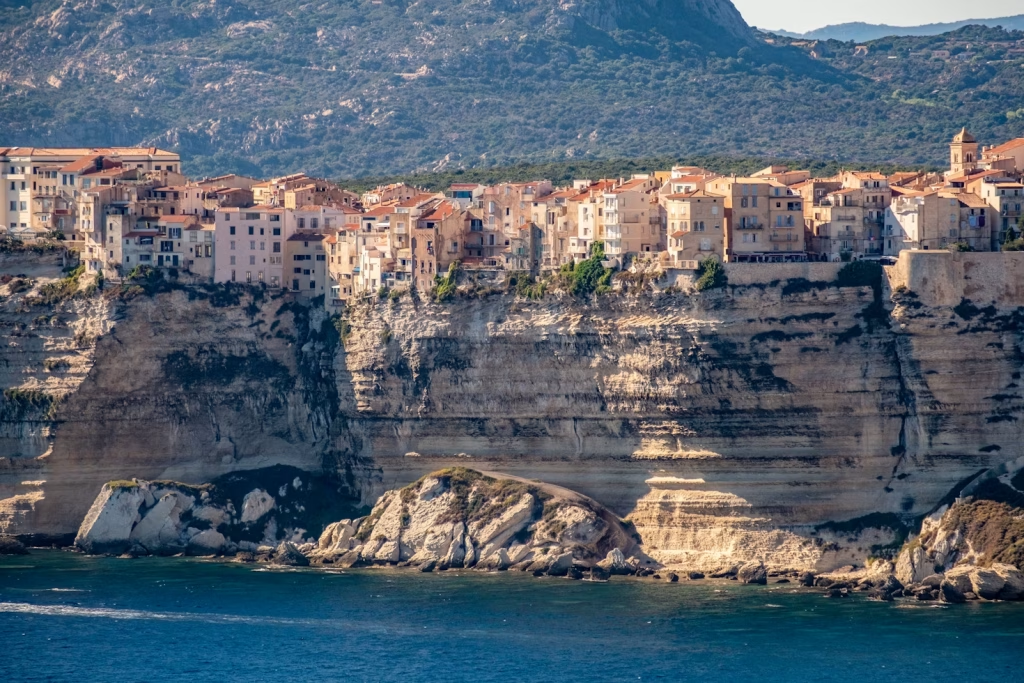
Corsica appeals to retirees prioritizing natural beauty, mild winters, and a distinct cultural identity. Costs can be higher in coastal areas, and healthcare options are more limited than on the mainland. It suits independent retirees comfortable with geographic isolation and a slower administrative pace.
Grand Est
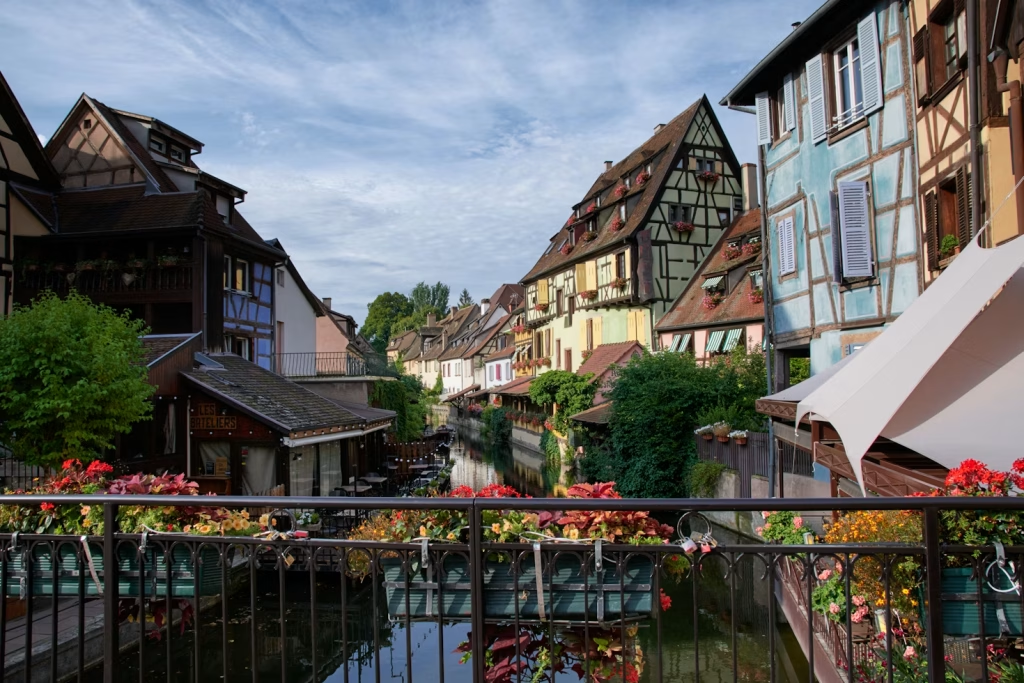
This region offers good value housing, strong cross-border infrastructure, and reliable healthcare, especially near Strasbourg. Retirees with ties to Germany, Switzerland, or Luxembourg may find it particularly appealing. The climate is colder than southern France, but costs are generally lower.
Hauts-de-France

Less known among retirees, this region provides low housing costs and good transport links, including proximity to Paris and northern Europe. It can suit budget-conscious retirees who prioritize affordability over climate. Healthcare access is strong in urban areas like Lille.
Île-de-France (Paris region)

The Paris region offers exceptional healthcare, public transportation, and cultural access, but at significantly higher living costs. It suits retirees with higher budgets who want urban convenience and minimal reliance on cars. Housing and administrative complexity are the main drawbacks.
Normandy

Normandy appeals to retirees seeking coastal scenery, moderate costs, and proximity to the UK and Paris. Towns like Caen and Rouen provide solid healthcare infrastructure. The climate is cooler and wetter, but daily living is practical and less crowded than in the south.
Nouvelle-Aquitaine
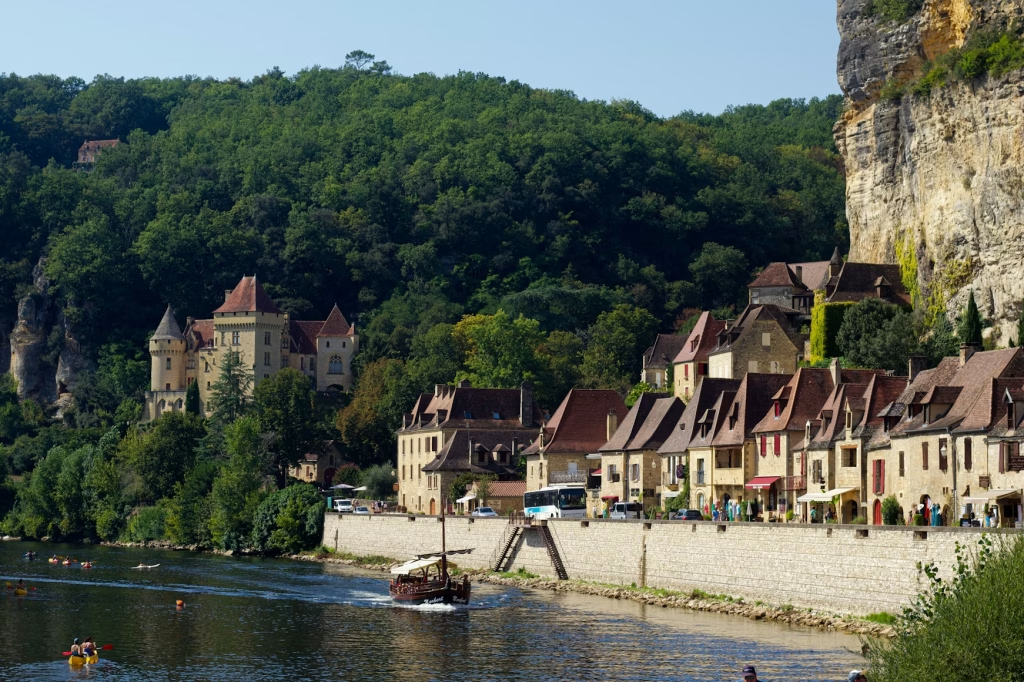
This large region is popular with retirees for its diversity, affordability, and strong expat presence, especially in rural areas like Dordogne. Cities such as Bordeaux offer excellent healthcare and transport, while countryside areas provide lower costs and space. A car is often required outside urban centers.
Occitanie

Occitanie combines Mediterranean climate, reasonable costs, and good healthcare access, particularly around Toulouse and Montpellier. It is attractive to retirees who want sunshine without Riviera pricing. Rural areas are affordable but require more self-sufficiency and French language skills.
Pays de la Loire

This region offers balanced living: moderate climate, good infrastructure, and lower housing costs than many coastal or southern areas. Cities like Nantes and Angers are frequently cited for livability and healthcare access. It suits retirees seeking stability rather than a resort-style lifestyle.
Provence-Alpes-Côte d’Azur

The French Riviera and surrounding areas are known for climate, scenery, and healthcare quality, but also higher housing costs and seasonal congestion. Cities like Nice and Aix-en-Provence work best for retirees with higher budgets who prioritize sunshine and access to specialists. Smaller inland towns can offer better value than the coast.
Pros and Cons of Retiring to France from the US
Advantages for American retirees
- Straightforward residency option
- A non-working long-stay visa that suits retirees and does not require employment or major investment.
- Lower, predictable healthcare costs
- Regulated pricing and broad coverage reduce financial uncertainty compared to the US system.
- Potentially favorable tax treatment
- The US–France tax treaty can result in little or no French tax on common US retirement income.
- High quality of everyday life
- Walkable towns, strong consumer protections, and high food standards support comfortable daily living.
- Reduced reliance on cars
- Public transport and compact cities make daily life simpler and often less expensive.
- Stable living costs
- Regulated utilities, tenant protections, and modest property taxes limit volatility.
- Wide lifestyle choice
- Coastal, rural, urban, and mountain regions within one legal and healthcare system.
- Long-term residency stability
- Clear renewal paths and access to multi-year residence cards.
- Cultural and social enrichment
- Language, food, and local traditions offer ongoing engagement in retirement.
- Easy access to Europe
- Central location and rail networks simplify travel beyond France.
Challenges and common surprises
- Bureaucracy moves slowly
- Administrative processes are document-heavy, sequential, and often require patience.
- French is necessary for daily life
- English is not widely used outside expat-friendly areas; basic French greatly improves quality of life.
- Housing can be competitive
- Rentals often require extensive paperwork, guarantors, and advance planning.
- Upfront costs are common
- Deposits, agency fees, and initial insurance expenses can be higher than expected.
- Banking is less flexible than in the US
- Opening and maintaining accounts can feel rigid, especially during the first year. Monthly fees also increase costs.
- Cultural norms differ
- Service expectations, communication style, and pace of life may require adjustment.
- Regional cost variation is significant
- Popular cities and coastal areas can be far more expensive than anticipated.
- Limited income flexibility on retiree visas
- Working, freelancing, or earning French-source income is generally restricted.
- Tax rules are complex at first
- Even when taxes are low, reporting obligations can be confusing initially.
- Integration takes time
- Social circles develop slowly and often require active effort.
What We Wish We’d Known Before Moving to France
The first six months were the hardest
Almost everything felt more complicated at the beginning: paperwork, appointments, and learning how systems actually work. After we finished the initial burst of bureaucracy, daily life became noticeably easier.
Renting first was the right decision
We were glad we didn’t buy property right away. Living in France for a year helped us understand regions, climate, and what mattered most day to day.
Ongoing costs felt manageable, but setup wasn’t cheap
Monthly living expenses were reasonable, but deposits, fees, and initial insurance added up quickly.
Expat communities helped, but didn’t replace integration
Other expats were invaluable at first, but long-term comfort came from building local routines and relationships.
Choosing the right region mattered more than we expected
Our quality of life depended far more on location than on France as a whole.

Common Mistakes Americans Make When Retiring to France
Choosing the wrong health insurance
There’s more to your health insurance plan than just meeting the visa requirements. After you get your Carte Vitale, you should convert your insurance plan into a supplementary mutuelle policy. Not only will this save money, but mutuelles integrate directly into the public healthcare system, meaning no need to submit claims or handle reimbursements manually.
One option for an insurance plan that easily converts to a mutuelle is with Feather. Their offerings are tailored for English-speaking expats moving to France, meaning they’re compliant with the VLS-TS visa requirements. Get $15 off per policy with code FRANCEFI.
Misunderstanding tax residency
Forget the 183-day rule. Tax residency can start the day you arrive in France on your visa. Have a tax plan in place before landing.
Moving without learning basic French
Unlike many other Western European countries, English is not widely spoken in France. The more French you’re able to learn before arriving, the smoother your transition will be.
A great tool for starting to learn is Duolingo. If you’re able to spend 20 minutes per day on the app, you could potentially reach A2-level French in a year.
Frequently Asked Questions About Retiring to France
Can retirees work or freelance in France?
The VLS-TS Visitor visa doesn’t include work authorization, so it’s impossible to be hired for a job in France.
Working remotely for a foreign company is a major grey area. It all comes down to how one defines working in France. Part of the VLS-TS application includes a promise not to exercise any professional activity in France.

The legal definition of the Visitor visa is also quite clear: it does not authorize exercising any professional activity (not just in France). “…cette carte n’autorise pas l’exercice d’une activité professionnelle.”
However, many people report using income from remote jobs as their financial justification when applying for the Visitor visa, and being approved. It’s certainly a gamble for visa renewal, and the definition of working in France will be reinterpreted by the immigration officer processing the renewal application. They may disagree with the Embassy’s initial decision.
There hasn’t been any official clarification on the interpretation of the law. Until there is, the issue remains unresolved. However, working remotely risks being denied a visa renewal and upending your entire retirement.
Can I buy property as a US retiree?
There are no restrictions on buying property in France, even if you don’t have residency in France.
Foreign buyers can even qualify for a mortgage. The interest rates and financing terms are more advantageous for residents, however. In the eyes of the bank, you become a resident after the first tax filing, meaning it’ll take a year to qualify.
How long does it take to become a permanent resident?
Permanent residency is available after five continuous years of living in France. After one year on the Visitor visa, it takes four one-year renewals of the ensuing residency card to qualify. Permanent residency is valid for 10 years and is renewable.
Can I bring my pets with me to France?
Yes, pets can come with you to France. They’ll need to be vaccinated and microchipped, and there’s extra paperwork involved.
Can Americans drive in France?
Yes, residents can legally use their American driver’s licenses to drive in France for the first year.
However, after one year, it’s mandatory to have a French license. France only allows driver’s license exchange with a select few US states. All others will have to pass the French driving exam. Read about our experience with the license exchange here and another expat’s experience with the exam here.
Can Americans open a bank account in France?
Yes, but it can be more involved than you’re used to. Many banks don’t want to deal with the extra reporting requirements the US government demands, so they choose not to do business with Americans.
Two French banks that generally support American expats in France are Crédit Agricole (our bank) and BNP Paribas. Each branch is different, but they should have experience handling American clients.
Another indispensable banking tool is Wise. It’s an international money account where Dollars can be converted into Euros and transferred onwards. It proved invaluable when we first arrived. The bank wants proof of a local address before opening an account, and the landlord expects to be paid through a bank transfer. Problem solved with Wise.
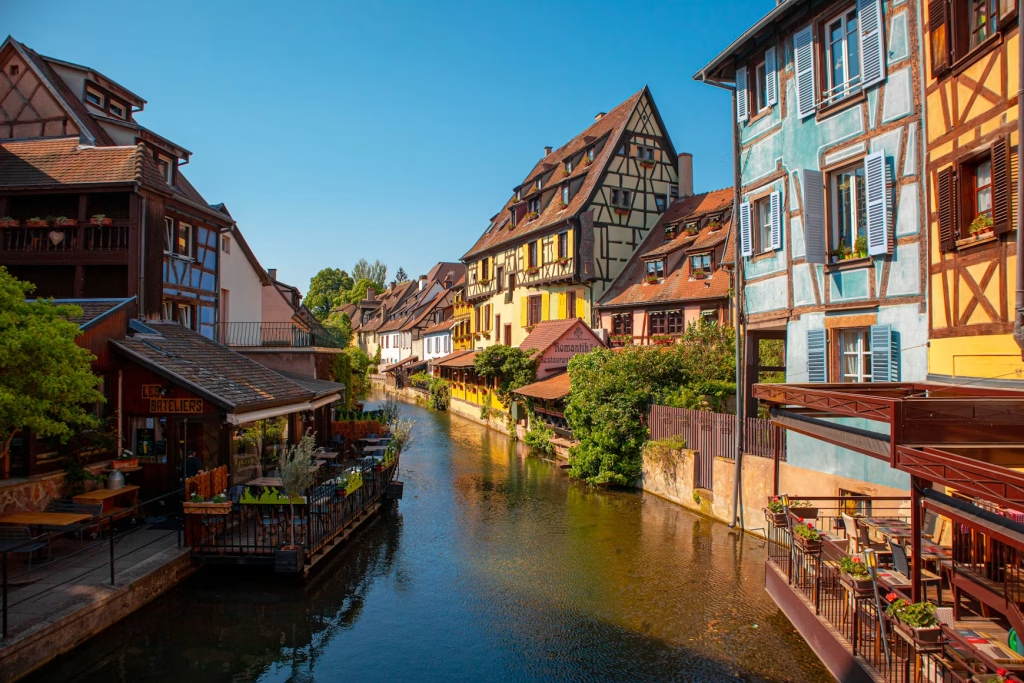
Is Retiring to France from the US Worth It?
For many Americans, retiring to France is worth it, but not for everyone. The decision tends to come down less to finances and more to tolerance for change, administration, and cultural adjustment.
Who France is best suited for
Retiring to France often makes sense if you’re looking for a slower pace of life, predictable healthcare costs, and a long-term residency option that doesn’t require employment or large investments. Daily expenses often feel more stable than in the US, especially once housing and healthcare are set up.
France works particularly well for retirees with reliable US-source income such as Social Security, pensions, or investment income. Under the US–France tax treaty, it’s possible to legally owe little or no French income tax. Combined with regulated healthcare pricing and strong tenant protections, this can create a sense of financial predictability that is hard to replicate in the US.
Lifestyle also plays a major role. Walkable towns, public transportation, food quality, and access to culture and travel can lead to a much more vibrant retirement.
Who might struggle with retirement in France
France may not be a good fit if you expect fast customer service, flexible rules, or English-first environments. Administrative processes can feel rigid, slow, and frustrating, especially early on. Comfort with ambiguity and delays is essential.
Retirees who want to continue working, freelancing, or actively managing businesses may also find the standard Visitor visa limiting. While daily life costs can be reasonable, popular cities and coastal areas can still be expensive, and housing competition can be intense.
Final thoughts from Americans living in France
For us, retiring to France has been worth it, but not because everything was easy. It was worth it because the trade-offs aligned with what we wanted at this stage of life.
The first six months required patience. Paperwork moved slowly, systems felt unfamiliar, and everyday tasks took more effort than we expected. Over time, those challenges became routine rather than obstacles.
What made the move worthwhile was the lifestyle. Being able to walk most places, rely less on a car, eat well without effort, and live in a place that values time over urgency changed how retirement felt day to day. Travel within France and across Europe became part of normal life rather than a special event.
Looking back, retiring to France was not about finding a perfect country. It was about choosing a place where the compromises felt reasonable and the long-term quality of life felt sustainable.
🥖🧀🍷
Subscribe to our Newsletter and never miss a post!


Leave a Reply