
January marks our one-year anniversary of moving to France. It’s been a whirlwind year with plenty of ups and downs, but we’re finally feeling settled now that we’ve moved to Annecy from Nice.
The first six months of living here were definitely the hardest. Culture shock subtly manifested in all sorts of ways for us. A long list of bureaucratic tasks drained our energy. But slowly, things improved.
Despite the cold and occasional snow, Annecy is proving to be a really great fit for us. We’re making friends more easily, there are plenty of activities tailored to what we like to do, and the town has some great vibes.
Is Life in France Easier After One Year?
After celebrating our one-year anniversary with France, we can confidently say that it does!
Between finding an apartment, having our OFII medical exam, applying for the Carte Vitale, and exchanging our driver’s licenses, the first few months are exhausting.
Luckily, most of the bureaucracy is front-loaded. Once settled in an apartment and a part of the public healthcare system, things get much easier. Finally, the Joie de Vivre can shine through the clouds of paperwork.
The Culture Shocks of the First Year
Looking back, it’s obvious we had some major culture shocks when we moved to France. But at the time, it wasn’t a conscious feeling of being culture shocked. However, we certainly had to make some major adjustments to get used to life in France.
The bureaucracy
One of the biggest shocks, while a bit cliché, is the adjustment to the bureaucracy. Imagine yearning for the good ol’ days of going to the DMV: the doors unlock right on time, everyone takes a number and waits orderly, the needed forms listed online match the exact ones you’ve brought and the exact ones the clerk needs, and maybe there’s even a smile and a joke along the way.
What’s that you say? You don’t remember the DMV fondly? Culture shock is realizing just how good you used to have it, and how much worse it could have been.
If you have a type-A personality, this adjustment will likely be harder on you. There are plenty of ways to improve the process, but suggesting so would only make it worse. You must learn to let go and roll with the punches.
Business hours
Another big adjustment has been the hours when businesses are open and things can get done. Ever needed to go to the bank, but they’re only open while you’re at work? Almost every business in France is like that, plus they’re closed from 12-2pm for lunch.
But the reasoning behind this is part of the charm of France. Employees are humans too, who don’t want to wake up early, who want to relax at lunch, and who want to go home and have dinner with their family. No one wants to work a nightshift or show up at 6am. Culturally, conveniences and profits are sacrificed so that employees can have a better quality of life.
How closed off the French are compared to Americans
Americans and French may just be polar opposites. Americans are smiley and friendly, and it’s normal to strike up a conversation or engage in small talk. But going from small talk to a more meaningful relationship can be difficult.
The French, by contrast, appear very closed off at first. They’re unlikely to smile in public or talk to strangers. However, under the cold exterior, they tend to be very loyal, long term friends. The tricky part is just getting past the initial coldness.
The frequent grocery shopping
Gone are the days of leaving Costco with two weeks’ worth of groceries. Now we’re hard pressed to get even a week of groceries at once. And that doesn’t even count the almost daily trip to the boulangerie for a baguette.
A big part of this is not owning a car; we can only haul so much food at once. But the stores also don’t sell food in bulk, as most people shop multiple times per week. With more fresh food and fewer preservatives, food just needs to be consumed sooner.
Expectations vs Reality of Living in France
When we dreamed of moving to France, we pictured strolling through quaint old towns, shopping for local products at the weekly market, and sharing a bottle of wine over a many hours-long lunch.
After living in France for a year, most of these things are… true!
Whenever we take a trip to a new city, we always end up walking through the old town and stopping at a cafe. They’re often located in the most central part of town, extremely walkable, and sometimes totally car-free.
While we don’t often shop at a picturesque market, we do always opt for local products when grocery shopping. Most of our shopping is done in a less-than-glamorous supermarket, but every French supermarket still prioritizes local products.
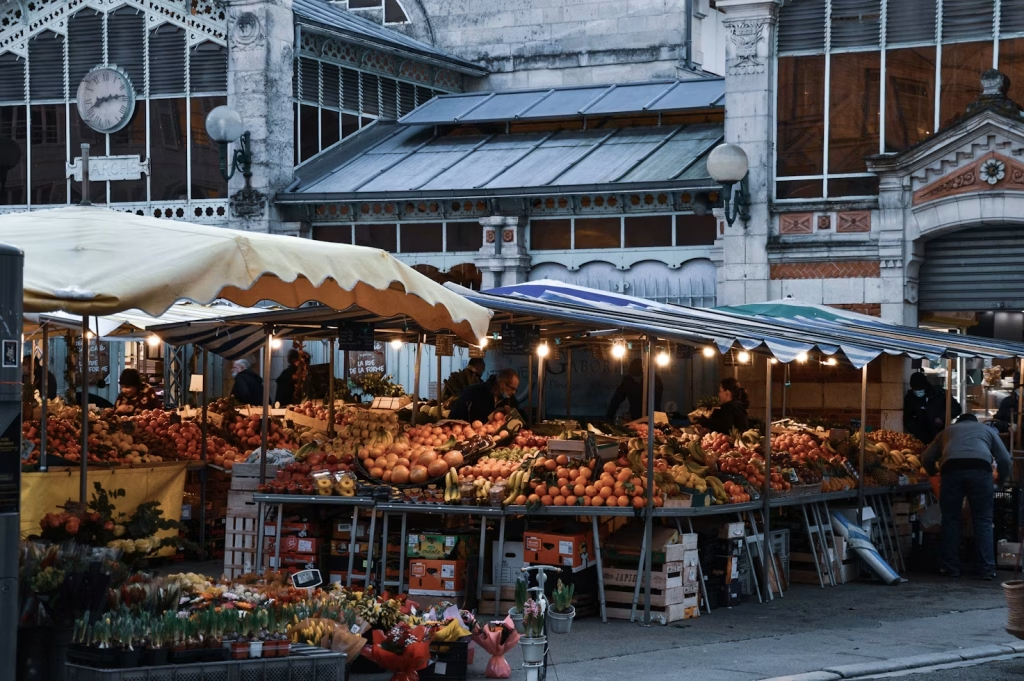
Sharing a bottle of wine at lunch may not be a daily event for us, but we do enjoy it from time to time. Meals are slower here, and we’re less likely to meal prep in bulk. We’re enjoying exploring French cuisine, both at home and in local restaurants.
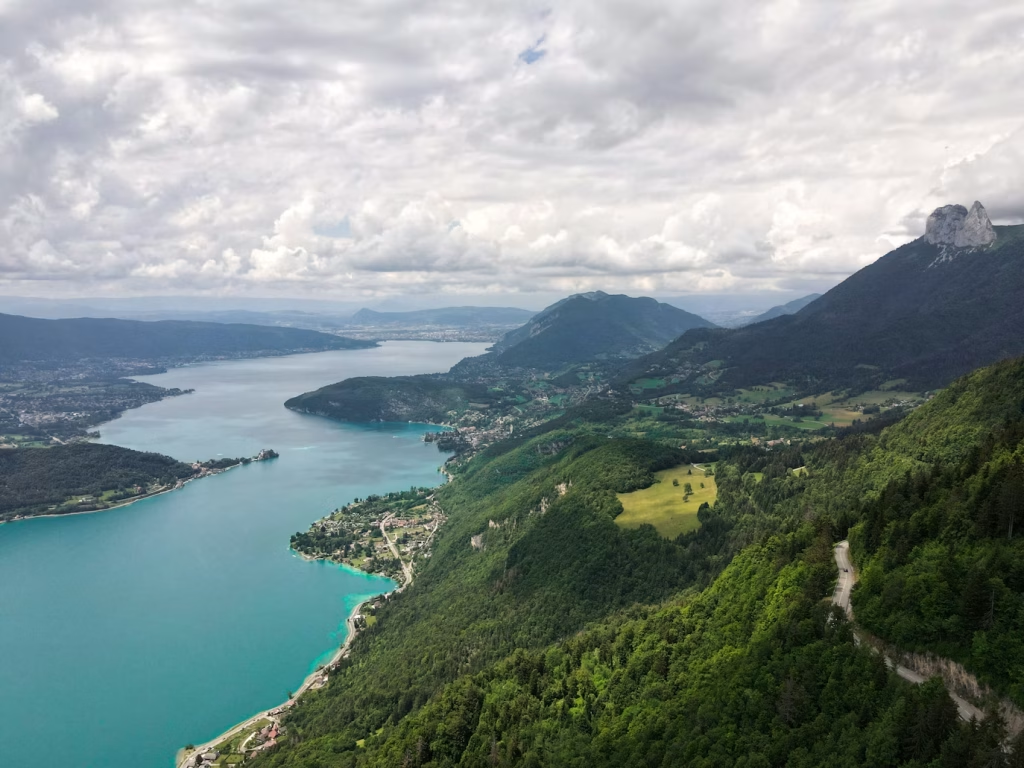
Other than that, most mornings involve savoring a cup of coffee while watching the winter sun rise over our local mountain. Days are spent Savoy-style mountain biking, hiking, rock climbing, and lakeside strolling. Evenings are either spent with friends or at home reading, learning French, or working on this site.
Transportation
One major area where our expectations didn’t match the reality was around transportation. Moving to an extremely walkable and bikeable area, with robust public transportation and an environmentally friendly populace, we expected the car to no longer be king. How wrong we were.
Despite all the painful congestion, the absolute lack of parking, and the plentiful alternatives, driving is still the top choice. Even worse, all the cars are diesel, meaning you can smell the traffic jam before you see it. Clown car disease knows no borders.
Language and Integration
Learning the French language
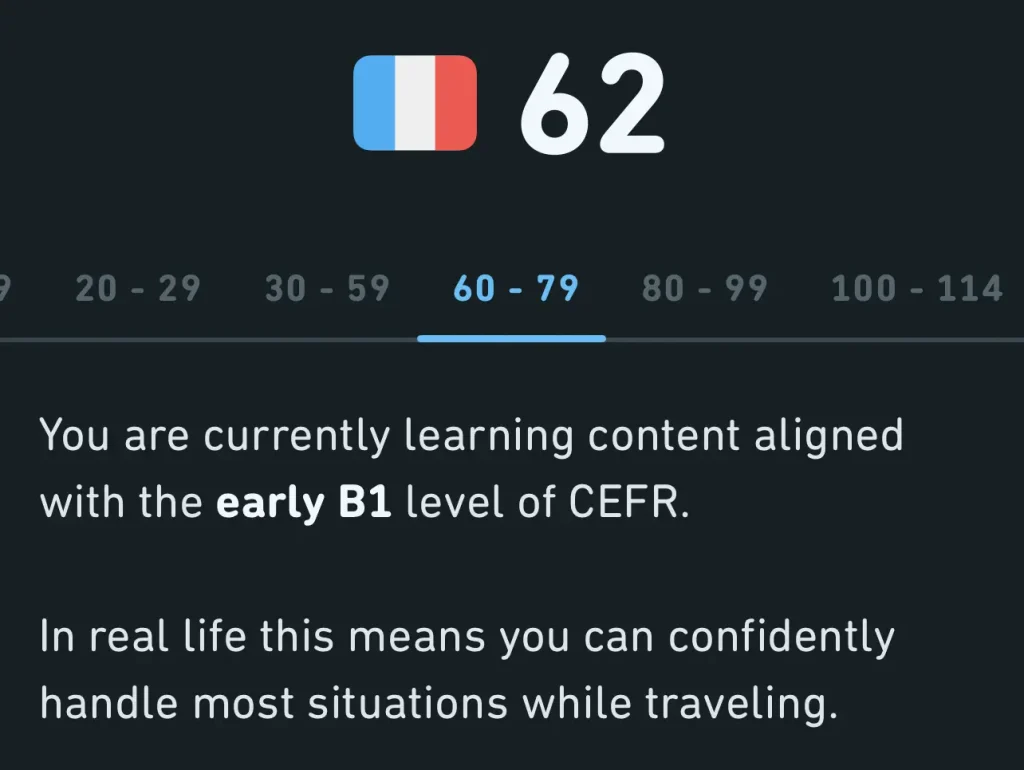
After 450 days of grinding on Duolingo, I’m comfortably level A2 in French and working towards B1 now. Hopefully, I’ll finish B1 by early 2027.
I had imagined this would be the point where things got easier and I’d be able to watch regular French media instead of just beginner, slow-talk videos. Unfortunately, I still struggle to understand regular-speed French. More and more words are sticking out, but I can’t keep up with the mental translation at conversation speeds.
Luckily, I’m able to be fairly independent in daily life. Many more people speak English in Annecy than in the South of France, and they tend to switch to English quickly. For those that don’t, I have enough basic skills and vocabulary to navigate most situations.
This has greatly improved daily life, now that I feel confident to go shopping on my own or try talking to someone new. Early in the year, I really relied on my fluent wife, but I’m much more autonomous now.
Integrating into French culture
We’ve made great progress integrating further, but some things we’re still stubborn hold-outs on.
Our days have drastically slowed down, our meals are taking longer, and we’re not fighting against system inefficiencies (as much).
Not knowing much about French wines, we’ve started a wine tasting group amongst expats and locals. Most surprisingly, the famous Bordeaux and Burgundy wines have been our least favorite, at least for the under €12/bottle range. The hits, for us, have been wines from the Southwest and the Rhone Valley.

One of the hardest adjustments has been the timing of dinner. Locals are shocked to hear how we eat around 5pm. If we do go out to dinner, we’re usually finishing around the time many people are just starting to show up. We’ve been to some group dinners where we don’t finish until midnight!
What We Misunderstood Before Moving to France
We did countless hours of research on moving to France before we applied for our visa. But with all the details blending together, we missed a few points.
No language test or OFII Integration course
We were pleasantly surprised to find out that the VLS-TS Visitor visa isn’t required to take the OFII Integration course or pass any French language test.
Originally, we thought that all VLS-TS visas had to take the 4 day integration course and either pass a French A2 language test or be prescribed mandatory language classes.
As our OFII medical exam date loomed, French lessons were consumed at a frenzied pace. But on the day of the exam, we were dismissed after meeting with the nurse. We hurriedly checked the government’s website to make sure they weren’t forgetting our language tests. Sure enough, Visitor visas are exempt.
No path to citizenship for the Visitor visa
Recent guidance in 2025 is sadly preventing Visitor visa holders from obtaining French citizenship.
When we applied for our visa, we were excited to be able to eventually apply for French citizenship. Sadly, we seem to have missed the boat by a few years. As it currently stands, citizenship requires economic integration by working a local job for several years. Yet the Visitor visa doesn’t grant the right to work in France. We hope this new change is reversed by the time we qualify to apply, after five years of residency.
Advice for People Considering the Move
After going through a tough move across the country, our biggest advice would be to spend more time visiting various parts of the country. If multiple regions might tick all your boxes, make sure to see them all before settling.
We had heard great things about Annecy before moving to Nice. Had we spent even a few days in Annecy, we may have realized we needed another trip to France to decide where we wanted to settle.
Also, keep in mind that visiting as a tourist is much different than living as a resident. Make sure to stay long enough that vacation-mode ends and the realities of daily life set in.
Finally, it’s important to have a very flexible budget when retiring abroad. Exchange rate fluctuations, new taxes and fees, and the high cost of an international move can eat through a carefully planned budget quickly.
Questions? Comments? We’d love to hear from you in the comment section, or feel free to write us directly.
🥖 🧀 🍷
Subscribe to our Newsletter and never miss a post!


Leave a Reply