
It’s been just over six months since we first arrived in France. Our first half-year has been a rollercoaster, with plenty of ups and downs. After being approved for our visas and moving here we found an apartment, validated our visas, and joined the healthcare system.
But more importantly, in between all those administrative tasks we started to build our new lives here, integrate into the culture, and I’ve been slowly but steadily chipping away at learning French.
Before moving here in January 2025, we’d only spent two months in the country on a tourist visa. Living in an AirBnB as a tourist is a very different experience than renting an apartment as a resident. Here are some of the things we’ve learned along the way.
First Impressions vs Now
The two months we spent as tourists in France were great. There were so many new things to see and discover. We went to the boulangerie every morning, explored charming old towns in the afternoon, and swam in the Mediterranean in the evenings. AirBnBs were easy to find and mostly without issue, the cities were so much more walkable than we were used to, and all we had to do was show up with our American passports to get 90 days in the EU. The joie de vivre was real and we loved relaxing with the slow pace of life.
When we came back to move here permanently, we dove straight into the deep end. The first month was dedicated to apartment hunting as a full-time job and it was quite exhausting. Feeling the pressure to validate our visas and being exhausted from living out of a suitcase for a year, we picked the first apartment we liked.
Since moving in, we’ve had a constant stream of issues with the apartment. Broken refrigerator, oven, and towel dryer, carpenter ants in the closet, and electric shocks from the sink. It’s been a huge adjustment to the slow pace of life when its the landlord or repairman taking it slow and easy.
We’ve also had the constant bureaucratic tasks to keep us busy. Visa validation and medical exam, Carte Vitale application, Driver’s License transfer, and soon our visa renewals. Many days were spent printing forms, filling out forms, and thinking about more forms instead of relaxing and living the good life.
But despite all the negative or tedious things that come with an international move and a new culture, we’ve had more and more good times lately. We’re adapting to the local culture, making good progress on making French friends, and settling into a nice routine.
Daily Life and Routines
Our days are heavily influenced by the seasons here. We live without a car, and the ability to do so was a big driving factor for us leaving the US. But without a car, we’re exposed to the elements and have to plan accordingly.
Right now, in peak summer heat, all of our errands and outdoor activities take place either in the mornings or evenings. We spend midday indoors learning languages, reading, working on this website, or doing a home workout. The only time we venture out is to go to the beach.
For us, summer has been the harshest season as most days are humid and over 30°C (86°F) and it’s difficult to be outside from 9am-6pm. We’re always amazed at how many tourists visit during the summer, especially from Northern Europe, where summer is arguably their best season. The silver lining is that there are so many events going on in the summer, many of them after sunset in the evenings. We’ve adapted to the siesta schedule so we can make the most of the late evenings and early mornings when it’s cool.
Spring, autumn, and winter are much more pleasant here in the South of France. We’re able to go out and ride bikes, walk, swim in the sea, or hike at just about any time of day. It’s almost always sunny, so even the colder winter days feel nice. We easily average over 15,000 steps per day even when we just run an errand and grab a baguette from the local boulangerie. Only when it rains for several days do we find ourselves doing much indoors.
Learning French
When we moved to France, my wife was already fluent in French. I, however, could hardly order a baguette. For the last six months I’ve been putting in about 30 minutes to an hour of French per day. I’m now getting comfortable running errands or ordering in a restaurant on my own. I’ve still got a long way to go, but it’s been great to see my progress month by month.
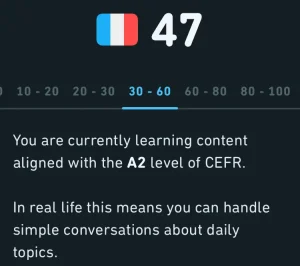
For learning, I use a combination of multiple different apps and websites. Every day I do Duolingo for at least 15 minutes. I’m also taking a more formal course on Udemy to fill in the gaps that Duolingo leaves out.
When I have time, I watch Youtube videos in French while reading the French subtitles. Some of my favorite channels are French Facile, HelloFrench, and ExploreFR.
Finally, I feel that just being out in the world, hearing everyone speak French is immensely helpful. I’m able to hear individual words now, even if I don’t know what they mean, instead of one long stream of sound.
My goal is to be solidly A2 by the end of 2025 and start working on the B1 courses in 2026.
Challenges and Surprises
Housing
Our main challenges settling in France have largely been based around housing. While we’re not contractually locked into a lease like in the US, the sheer lack of rental units and difficulty finding an apartment is just as effective. We’d love to move to a better unit, but there just aren’t any. With all the tenant protections and guarantees, it’s just easier for landlords to list on AirBnB instead. Make €1000 per month as a rental but risk having an unevictable tenant squat for years, or make €12,000 on AirBnB in the high season but have the unit sit largely unoccupied the rest of the year? Most landlords pick the latter.
We may have just unknowingly picked a bad apartment, and it’s not representative of housing in France. But from what we’ve seen of the several AirBnBs we’ve also stayed in here, the older buildings here just have more problems. If this was a developing country with $500 monthly rent, it’d be easy to just ignore some of these issues and move on. But average rents in Nice are closer to €1500, comparable to most of the US. In the US, that price includes much more space, modern appliances like a dryer and garbage disposal, as well as plumbing and electric installed after building codes were established.
The Good Life
On a more positive note, we’ve been surprised as just how good the French live. Between the 5+ weeks of time off and 35 hour work week, less emphasis on consumption and status, and the long and elaborate meals, life here is much more laid back and relaxed.
The vacation culture here is truly incredible. Never in our whole careers did we take more than a week off at a time. In France, it’s common to take the entire month of August off, every year. And 30 days is the minimum amount of paid time off required, compared to zero in the US.
Dinner in France is a thing to behold. Forget a quick bite, this is often a multi-hour event. Multiple plates, drinks, wine, dessert, digestif, cheeses. It’s great fun and always runs long into the evening. The serving sizes are smaller, but with all the courses and the slow pace, I’ve always left full but never stuffed. Yet for all the complexities and courses, the bill usually splits up to around €30-40 each.
The Food
The grocery store food quality in France is leagues ahead of that in the US. There’s a much greater emphasis on fresh food, a wide range of quality local ingredients, and very little selection of processed foods.

The snack options here are definitely lacking. While there are a few options like Doritos and Snickers available in the supermarket, it’s nothing compared to the aisle after aisle of chips and candy back in the US. The snacks they do have here are also noticeably less addictive and certainly don’t come in family size. We definitely miss our snacks, but their absence has made it very easy to eat healthy and lose weight.
The Camaraderie

France takes fraternité seriously. Each town has dozens, if not hundreds, of associations open for anyone to join. The associations are like clubs based around an activity, such as sports, theatre, arts and culture, music, volunteering, and many more. They’re open for all to join and are non-profit, so the entry fees are quite modest.
Once a year, each town has a Forum of Associations where all the associations set up booths and have info on what they are and how to join. Our experience has been it usually takes place in September, after vacations end and school starts back up. Luckily we wandered into our town’s forum by accident during our initial visit. We’ve since joined cycling, gardening, and boxing clubs and have had a blast.
Joining associations is a great way to make local friends, practice your French, and integrate into the community. There is definitely a stronger emphasis on teamwork and less competition between members, even in the competitive sports clubs. Overall, the French are more concerned with having a good time than winning and being #1.
Conclusion
While globalism has melded many cultures together in the West, there are still some stark differences between France and the US. Six months after our move, we’re still adapting to things here. But now that most of the bureaucracy is out of the way and my French is improving, things should start getting easier.
Questions? Comments? We’d love to hear from you in the comment section or feel free to write us directly.
🥖 🧀 🍷
Subscribe to our Newsletter and never miss a post!
Leave a Reply